Article written by Jane Schmidt and Victoria James, librarians at Toronto Metropolitan University Library —this project received a micro grant from Wikimedia Canada
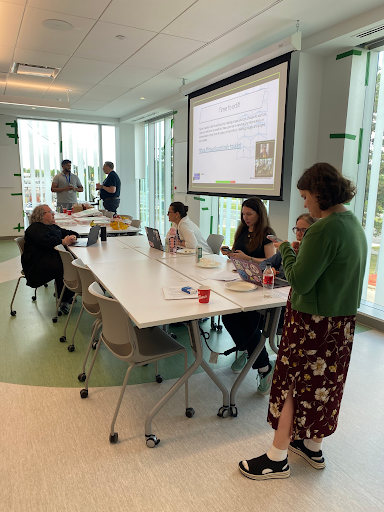
The National Indigenous History Wikipedia Edit-a-thon was a hybrid event, with in-person activities hosted at the Toronto Metropolitan University School of Medicine (SoM) in Brampton, Ontario on Friday, June 12, 2026 from 12-3PM. While the event was open to all TMU community members, hosting at the SoM inspired a specific focus, inviting medical learners, clinicians, educators, and community members to honour parallel ways of knowing in clinical encounters, in curriculum, and in public knowledge platforms. Participants reflected on how we can ensure this shared knowledge reflects accuracy, respect, and accountability. Hosting at the SoM also underscored the responsibility of health institutions to confront how colonial knowledge structures shape clinical practice and public understanding of Indigenous health.
The event began with the keynote “Truth Before Reconciliation” by Pulitzer Prize-winning investigative journalist and TMU faculty member Connie Walker. Her powerful keynote framed the event within broader truth-telling movements that resist state-sanctioned narratives and highlight the structural violence embedded in Canadian institutions. The keynote was followed by a training session to help attendees learn more about setting up a Wikipedia account, making edits, and contributing to the Wikipedia community. Attendees worked from a prepared spreadsheet of suggestions for the creation of new pages and edits to improve coverage of Indigenous histories online, focussing on the ongoing underrepresentation of Indigenous histories, health topics, and community-led scholarship. The editing work was framed not as neutral “improvement,” but as a collective intervention into a knowledge system that continues to reproduce colonial harm through omission, misrepresentation, and structural bias.
This training session was followed by collective editing, and statistics were collected in a dashboard. Pizza, coffee, and snacks were provided to help foster the community atmosphere by sharing a meal and sharing a goal. We also collected names of participants to be entered into a randomized draw to win gift cards purchased from GoodMinds, a First Nations family-owned bookstore.
We had 22 attendees in person, and 19 attendees online for a total of 41 participants. For future events, we might allot more time for the step-by-step training and more hands-on support for new Wikipedians. TMU Libraries would be happy to partner with faculty to incorporate editing activities – even very basic ones – into the curriculum or as a hands-on class activity. Future events could also deepen the political framing of editing activities, helping participants understand how small interventions in public knowledge systems contribute to broader movements for justice.