Article written by Kristy Read of Dalhousie University Library —this project received a micro grant from Wikimedia Canada
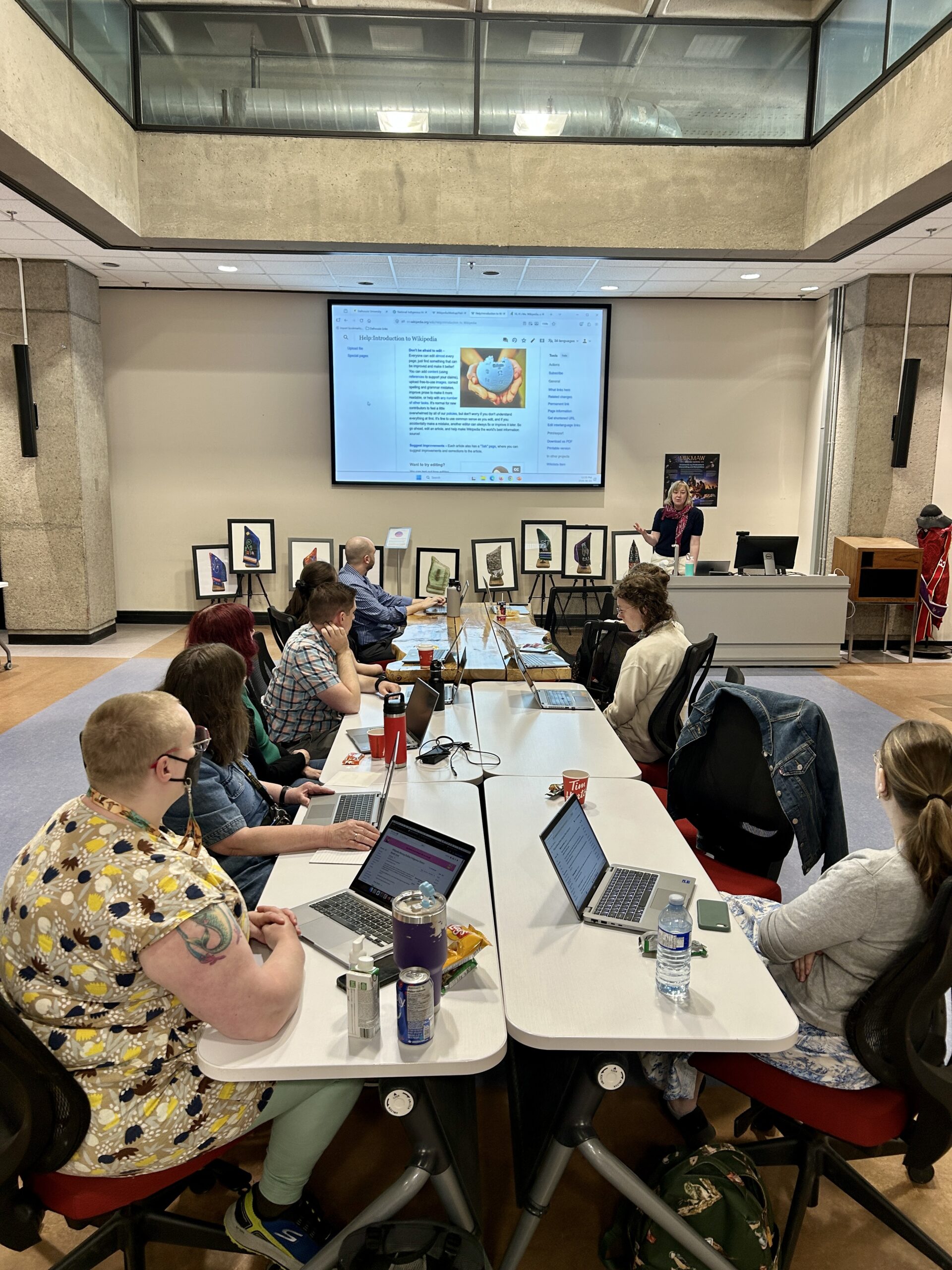
On June 3, 2026, Dalhousie Libraries hosted a Wikipedia Edit-a-thon in recognition of National Indigenous History Month, bringing together students, faculty, staff, and community members to strengthen Wikipedia content regarding Mi’kmaw artists, filmmakers, authors, musicians, and cultural organizations. Attendees worked collaboratively to expand existing articles, create new entries, and add reliable sources to articles.
In total, 15 participants took part in the Edit-a-thon, with a mix of those who could dedicate some editing time and those who could attend the introductory session on their lunch breaks. Together, participants created three new articles, edited 18 existing articles, and made 172 edits, adding nearly 6,000 words and over 100 new references. It was a productive day! As of June 10, the updated pages have almost 8,000 views.
The Edit-a-thon gave participants an opportunity to build skills and take part in shaping public knowledge. With guidance throughout the day from Dr. Stacy Allison-Cassin, assistant professor in the Faculty of Management and active Wikipedian, attendees learned how to edit Wikipedia, evaluate sources, and contribute responsibly.
“Wikipedia is an amazing, community-driven open and free resource supported by hundreds of language communities and knowledge activists all over the world,” she says. “As a non-commercial resource, Wikipedia plays a critical role in education and shapes the way we encounter information online.”
For many, it was a chance to connect personal experience with the broader importance of representation online. “I thought it was a cool opportunity to help students bridge the gaps in information and knowledge and especially where there’s an area where there is a lot of gaps,” said one student participant.
Beyond the edits themselves, the Edit-a-thon was a collaborative and welcoming environment. Participants worked together, shared knowledge, and contributed to a common goal.
They demonstrated the power of collective action in strengthening the public knowledge ecosystem. By improving both the quality and representation of information online, participants are helping ensure a more accurate and inclusive record of Indigenous histories and cultures.